
The 1994 World Cup in America: How Skeptics Got It All Wrong
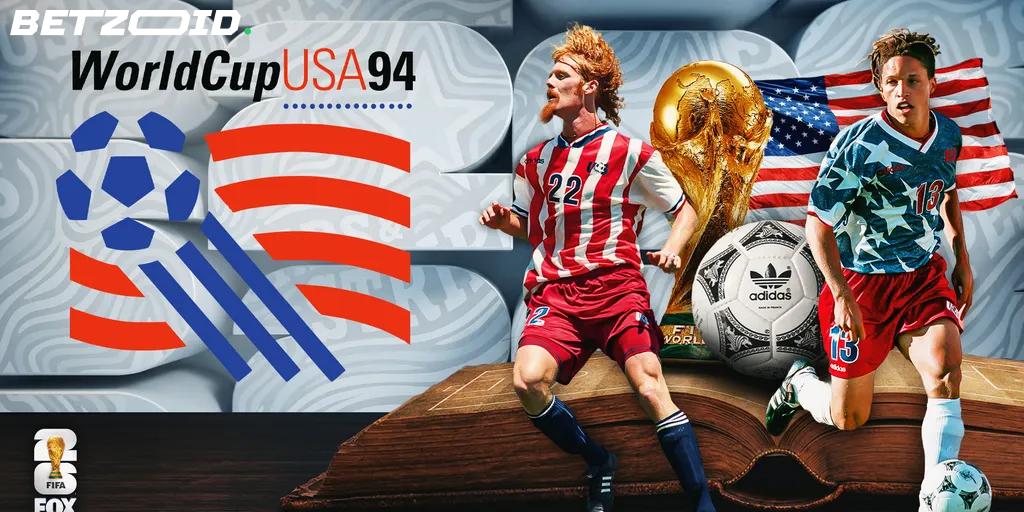
When the 1994 FIFA World Cup kicked off in the United States, football purists from Europe and South America had already made up their minds: America was the wrong place for the beautiful game. No established professional league. A country that barely understood the sport. The forecast was grim.
Those critics couldn't have been more mistaken.
A staggering 3.6 million fans packed stadiums from coast to coast — setting an all-time World Cup attendance record that remains unbroken more than 30 years later. Far from failing, the tournament became a watershed moment for soccer in North America.
Memorable matches that captivated a nation
The American squad entered as hosts with modest expectations but fierce determination. After failing to win a single match at Italia '90, they needed to prove themselves on home turf.
Their tournament opener versus Switzerland at Detroit's Pontiac Silverdome made history as the first indoor World Cup match ever played. Without proper air conditioning, the heat was unbearable. Midfielder Thomas Dooley later described it as "the worst place I have ever played at." Yet Eric Wynalda's spectacular curling strike silenced the critics momentarily.
A 1-1 result against Switzerland was followed by a shocking 2-1 upset over highly-fancied Colombia. Despite a subsequent 1-0 defeat to Romania, the Americans advanced to face Brazil on Independence Day at Stanford Stadium. Brazil prevailed 1-0 through a Bebeto goal, and even playing a man short for portions of the match, the South Americans proved their superiority.
Brazil proceeded to capture their fourth World Cup crown — their first since 1970 — by edging Italy in the final after a scoreless 120 minutes. The decisive penalty shootout produced one of football's most iconic images: Roberto Baggio launching his spot-kick over the bar. Italian heartbreak. Brazilian glory.
The dynamic duo of Romario and Bebeto netted eight goals combined throughout the competition. Romario claimed the Golden Ball after scoring five times, including strikes in every group match. He was unquestionably the tournament's standout performer.
Historic records and the only shared Golden Boot
The 1994 World Cup delivered some of the most peculiar individual achievements in tournament history.
Russian striker Oleg Salenko exploded for five goals in a single group stage encounter against Cameroon — a feat never duplicated. He finished with six goals total, all coming in the group stage before Russia's elimination. That tally earned him a share of the Golden Boot with Bulgaria's Hristo Stoichkov, who required four additional matches to reach the same number. It marks the only occasion the Golden Boot has been shared in World Cup history.
Stoichkov's impact extended far beyond statistics. His brilliance propelled Bulgaria to the semifinals, punctuated by a stunning free-kick that knocked out defending champions Germany. Salenko set a record. Stoichkov transformed his nation's football legacy. Both finished level on six goals.
Then came Diego Maradona's controversial exit. His 1994 campaign lasted precisely two matches. After scoring a memorable goal against Greece and celebrating with an intense, wide-eyed stare into the camera, he was expelled following a positive drug test. The icon who led Argentina to glory in 1986 departed in disgrace. It would be his final World Cup appearance.
- Golden Ball: Romario (Brazil) — 5 goals and masterful displays throughout the knockout stages
- Golden Boot: Oleg Salenko (Russia) and Hristo Stoichkov (Bulgaria) — 6 goals apiece, the only shared Golden Boot in tournament history
- Golden Glove (formerly Lev Yashin Award): Michel Preud'homme (Belgium) — shutouts against Morocco and the Netherlands before Belgium's Round of 16 elimination
- All-time World Cup attendance record: 3.6 million spectators, established in 1994 and still standing
The tournament's influence reached far beyond that memorable summer. Major League Soccer emerged directly from the momentum generated in 1994, now operating 30 clubs spanning 25 American cities and three Canadian markets. Today's American player pool is unrecognizable compared to the era when Alexi Lalas, Cobi Jones, and Marcelo Balboa — complete with their legendary hairstyles — represented the nation.
The 2026 World Cup returns to the United States as co-host with Canada and Mexico, with the championship match scheduled for July 19 at MetLife Stadium in East Rutherford, New Jersey. The country preparing to host bears little resemblance to the one that raised doubts in 1994. That remarkable transformation began during that groundbreaking summer.