
2026 World Cup Playoffs: Breaking Down Every Nation's Path to Football's Biggest Stage
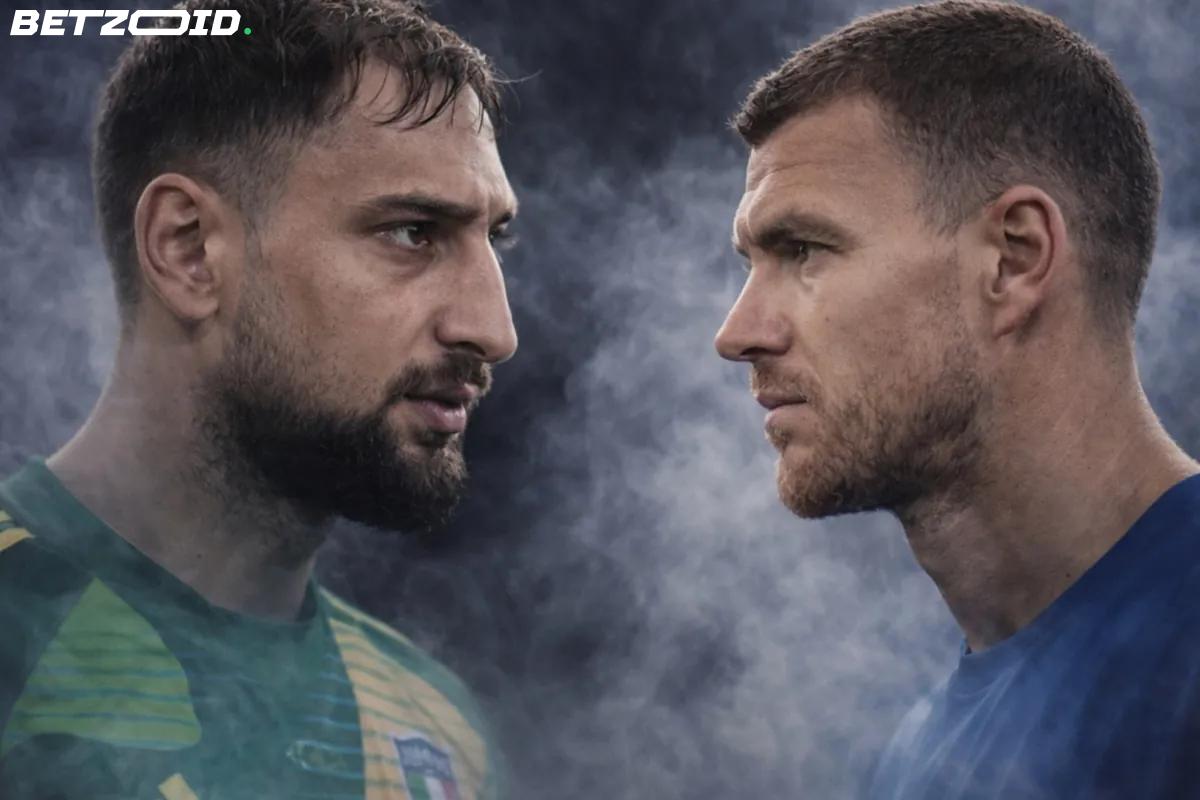
Twenty-two nations. Six precious spots. A single opportunity to reach football's grandest tournament. The 2026 World Cup playoff semi-finals begin March 26, where dreams will either be realized or crushed in spectacular fashion.
Europe claims four available positions. The remaining two are divided among other confederations. The matchups are confirmed. Time for excuses has expired. Here's your comprehensive guide to every team in contention — including several you might not know, but definitely should.
Europe's Battle: Title Contenders, Surprise Packages, and Potential Cinderella Stories
Italy enter these playoffs burdened by something far weightier than pressure — they carry the embarrassment of consecutive World Cup absences. Manager Gennaro Gattuso understood the assignment: anything less than qualification represents disaster for a four-time champion. Their opening opponent is Northern Ireland, seemingly straightforward on the team sheet. Italy's Achilles heel? Previous letdowns against supposedly inferior opposition. Star-studded roster. Zero certainties. Keep your eyes on Pio Esposito.
Northern Ireland last graced the World Cup stage in 1986 — the same year the Chernobyl disaster occurred. They managed a draw with Algeria before losses to Spain and Brazil. Their current roster features players scattered throughout England's lower divisions, complemented by several genuinely promising young prospects: Isaac Price, Shea Charles, and Kieran Morrison. They're massive underdogs against Italy, though Italy's history with underdogs isn't exactly reassuring.
Turkey represent everyone's nightmare opponent in this competition. Manager Vincenzo Montella already pushed Spain to their limits during group play. More critically, Turkey boast Arda Güler and Kenan Yildiz — possibly international football's most electrifying young partnership right now. They'll battle Romania, guaranteeing one legitimately dangerous side exits early. Both deserve better.
Romania, guided by legendary tactician Mircea Lucescu, face a cruel irony: across four decades of coaching excellence, Lucescu has never guided a national team to World Cup qualification. Not Romania. Not even Turkey during his tenure there. Andrei Ratiu provides attacking thrust, but that statistical burden looms large when margins are razor-thin.
Slovakia haven't appeared at a World Cup since 2010, yet they demonstrated at Euro 2024 their capability to damage anyone. They defeated Belgium. They nearly eliminated England before Jude Bellingham's 95th-minute heroics saved the Three Lions. Lobotka orchestrates play better than most European midfielders. They're legitimate contenders here.
Kosovo remain the Southeast European nation still seeking their first World Cup appearance. Franco Foda has quietly constructed something formidable — three victories, two draws, one defeat across recent international windows. Vedat Muriqi spearheads the attack with identical relentlessness he displays for Mallorca. Underestimate them at your peril.
Ukraine haven't competed at a World Cup in two decades. Serhiy Rebrov's squad features a compelling narrative — multiple key players are developing under elite club managers. Zabarnyi under Luis Enrique. Sudakov and Trubin under Mourinho. Vanat and Tsygankov under Michel. That calibre of coaching influence is evident. Their challenge? Facing Sweden.
Sweden topped League C, earned promotion, and secured their playoff position. Viktor Gyökeres currently operates at a stratospheric level most strikers can only fantasize about. Without Alexander Isak, Gyökeres becomes even more indispensable. Graham Potter debuts as Sweden's national coach here — intriguing timing for a high-stakes audition. If Gyökeres delivers, Sweden advance. That straightforward.
Poland have evolved beyond the Lewandowski show, even if he remains their primary weapon. Jan Urban's squad represents a generation that's relocated abroad and matured across competitive European leagues. Young Oskar Pietuszewski shines at Porto. Albania blocks Poland's path to the semi-finals, and throughout 15 historical encounters, Albania have defeated Poland merely twice.
Albania — Sylvinho's 'Black Eagles' — have never reached a World Cup. They eliminated Serbia in the playoffs to arrive here. That result alone confirms they're no passive participants. Ylber Ramadani and Nedim Bajrami deliver quality centrally, while Armando Broja provides physical presence up front. Muçi represents the unpredictable element.
Republic of Ireland barely advanced, defeating Hungary in stoppage time. Troy Parrott has netted 28 goals this season — that's not emerging form, that's a striker who's fully arrived. Evan Ferguson completes a youthful striking duo with serious potential. Ireland traditionally exceed expectations in playoffs. This generation might actually possess the talent to match the spirit.
Beyond Europe: Underdogs, Strategic Naturalizations, and Continental Dark Horses
New Caledonia rank 150th in FIFA's world rankings yet sit two matches from the World Cup. The expanded format granted Oceania an additional playoff berth and New Caledonia seized it. Most squad members aren't professional footballers. Their standout performer, Angelo Fulgini, was recently naturalized — he features for Lens and currently plays on loan in Saudi Arabia. The talent gap between this squad and their competition is undeniable. Yet their story deserves telling.
Jamaica represent CONCACAF's most compelling project. Their roster combines Jamaican and English-passport players, many dominating England's Championship. Leading them is Leon Bailey, translating Aston Villa's creativity under Unai Emery into international duty. Peak Bailey is genuinely unstoppable. The Reggae Boyz are building something special.
Democratic Republic of Congo last appeared at the World Cup in 1974 — coincidentally when they captured the Africa Cup of Nations. Sébastien Desabre has assembled genuine talent across all positions. Yoane Wissa leads the attack and represents the continent's most recognizable name in these playoffs. They'll face either New Caledonia or Jamaica. On paper, it's theirs to lose.
Bolivia outpaced Chile, Peru and Venezuela to reach this stage — no small achievement considering the competition. Oscar Villegas proceeds without Marcelo Moreno, the all-time leading scorer who emerged from retirement specifically targeting this World Cup. His absence creates a void. Miguelito shoulders the creative responsibilities. They'll confront Suriname.
Suriname nearly missed these playoffs due to political disputes threatening their entire campaign. Henk ten Cate addressed their squad deficiencies the Dutch way: naturalize Dutch players ineligible for the Netherlands. Haps, Boëtius, Joël Piroe, Sheraldo Becker — suddenly you've built a competitive squad. Piroe demands attention. This team formed under unusual circumstances, but they're genuinely dangerous.
Key Matchups to Watch
- Italy vs Northern Ireland — Italy's legacy demands qualification. Their recent form demands caution.
- Turkey vs Romania — Europe's most compelling draw. Güler's brilliance versus Lucescu's tactical stubbornness. Absolute toss-up.
- Ukraine vs Sweden — Gyökeres' exceptional form makes Sweden slight favourites, though Ukraine's club-coached core provides genuine danger.
- Poland vs Albania — Lewandowski and company should progress, but Albania specialize in proving predictions worthless.
- New Caledonia vs Jamaica — Bailey and the Reggae Boyz represent the logical selection. New Caledonia's journey deserves extending beyond one match.
- Bolivia vs Suriname — The non-European draw's most unpredictable matchup. Both nations have everything to prove and nothing to lose.
Six available spots. Sixteen teams facing elimination. Competition commences March 26.