
MetLife Stadium Pitch Installation Kicks Off for 2026 World Cup Final
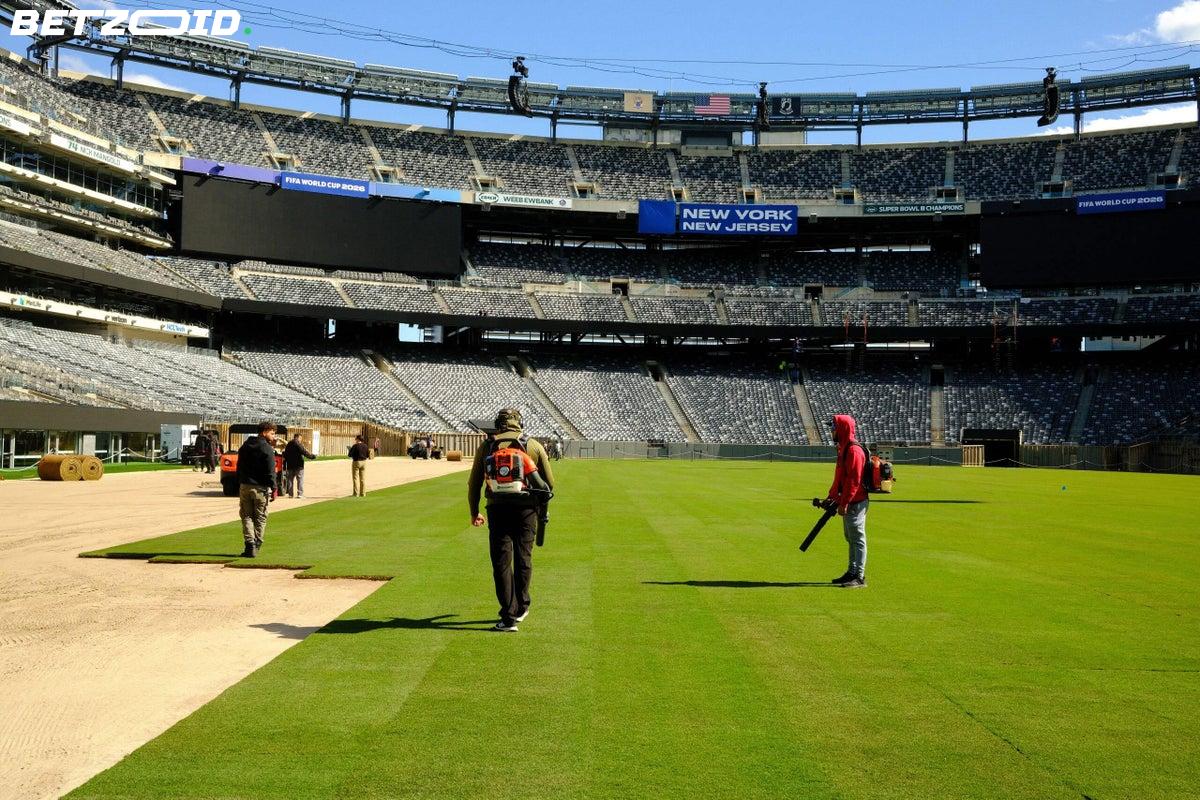
"The world's elite players deserve nothing less than the finest playing surface available." Those words from David Graham, FIFA's senior pitch manager, echoed through MetLife Stadium this week as crews began laying the turf destined to host the World Cup final on July 19th.
Installation commenced Wednesday evening at 5 p.m. A convoy of 27 transport trucks completed the approximately 12-hour trek from Carolina Green Turf Farm, located just outside Charlotte, North Carolina. This supplier became a last-minute replacement after New Jersey's harsh winter conditions—including over 54 inches of snow in Newark alone—destroyed the original grass order from Hammonton's Tuckahoe Turf Farms. Installation teams worked grueling 8-to-10-hour overnight shifts, finishing at 2 a.m. before returning eight hours later to continue. A specialized Zamboni-style machine will stitch the seams together next week, after which the intensive maintenance phase begins.
Engineering beneath the surface
The infrastructure supporting the Tahoma 31 Bermuda Grass exceeds what most supporters would expect. Beneath an 18-to-24-inch sand foundation lies a comprehensive irrigation network, a vacuum ventilation system delivering oxygen directly to grass roots, plus HVAC units circulating temperature-controlled air around the pitch edges. The setup functions essentially as an open-air greenhouse—technology that was conspicuously absent during MetLife's hosting duties at last summer's Club World Cup.
That tournament proved problematic from a pitch quality standpoint. Both FC Porto and Palmeiras managers voiced complaints about the surface immediately following the opening match at the venue. Players described conditions as "dry." FIFA absorbed substantial criticism and, to their credit, learned from the experience. The crucial difference this time: FIFA secured stadium access immediately after the NFL season concluded. They'll have 38 days before the tournament opener on June 13th—Morocco versus Brazil—compared to roughly two weeks of preparation time last summer. The pitch will have significantly longer to establish itself before competitive action begins than the Club World Cup's entire duration.
Graham didn't mince words about the comparison: "Last year's setup was a temporary overlay field. It lacked even basic irrigation infrastructure."
Match schedule and championship implications
MetLife Stadium—officially rebranded as "New York New Jersey" for tournament purposes—will host eight fixtures:
- June 13: Morocco vs. Brazil (Group Stage)
- June 16: France vs. Senegal (Group Stage)
- June 22: Norway vs. Senegal (Group Stage)
- June 25: Ecuador vs. Germany (Group Stage)
- June 27: Panama vs. England (Group Stage)
- June 30: Round of 32
- July 5: Round of 16
- July 19: World Cup Final
A strategic two-week interval separates the final group-stage match from the championship game, providing pitch maintenance staff crucial time to optimize surface conditions for football's biggest stage. Considering how pitch quality directly impacts both performance and injury prevention, this buffer represents practical necessity rather than excessive caution. The distinction between a final contested on pristine turf versus a compromised surface where muscle injuries occur on unpredictable bounces cannot be overstated.
Finalists will arrive having spent weeks training at regional preparation facilities, not on this pitch. Morocco's squad is based at The Pingry School in New Jersey, while Brazil trains at the Red Bulls' new Whippany complex. Neither team will experience the match surface until their pre-game walkthrough. Whether the turf withstands New Jersey's humid July conditions—with thunderstorms virtually guaranteed—remains the uncontrollable variable in this equation.
"This represents as legitimate an operation as exists anywhere," Graham emphasized. The Club World Cup demonstrated the consequences of insufficient pitch preparation at elite competition levels. FIFA clearly aims to avoid repeating that narrative—particularly not during the tournament's concluding match.