
Tottenham's Dramatic Fall: From Premier League Title Favourites to Relegation Battle
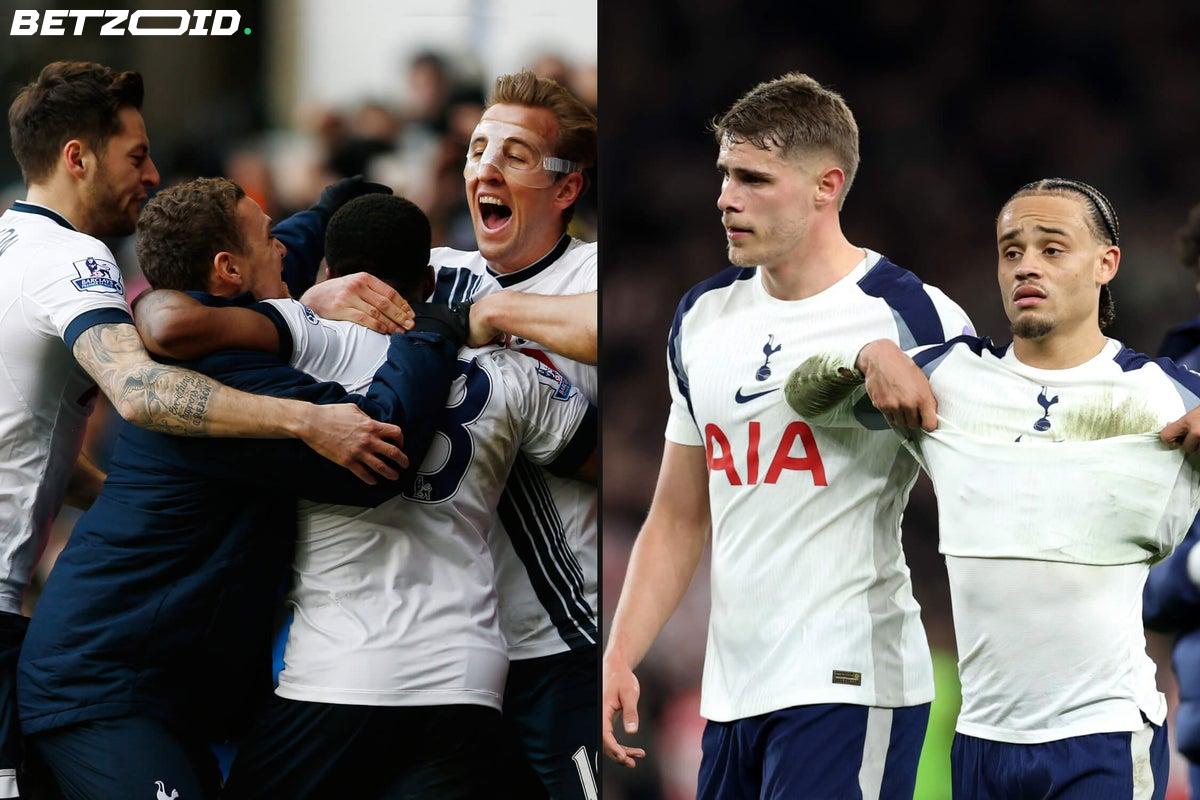
Cast your mind back a decade. Tottenham Hotspur were sitting pretty at the summit of English football.
February 28, 2016, marked a turning point. Mauricio Pochettino's squad rallied from behind to defeat Swansea City 2-1 at White Hart Lane. The atmosphere was electric. Then came the news that sent fans into raptures - Arsenal had fallen 3-2 at Manchester United.
Suddenly, Spurs sat three points clear of their North London rivals and just two points behind surprise leaders Leicester City. The betting markets responded accordingly, installing Tottenham as Premier League title favourites at odds of 7-2 for the first time in the club's history.
Flash forward to the present day, and those same oddsmakers have Tottenham at 9-2 to be relegated. What went so catastrophically wrong?
Failure to Refresh the Core
The critical error? Refusing to sell key players at the right moment. Pochettino assembled an exceptional squad on a shoestring budget, but no team can maintain peak performance indefinitely. Motivation wanes. Freshness disappears.
Kyle Walker's 2017 transfer to Manchester City proved to be an outlier. Danny Rose came close to joining Chelsea but ultimately remained. Dele Alli never secured his dream transfer despite internal concerns about his declining form. Christian Eriksen departed on the cheap with only six months remaining on his deal.
Chairman Daniel Levy resisted creating the perception of Tottenham as a selling club. However, this stubbornness meant the project grew stagnant. Internal staff likened the situation to a swimming pool desperately requiring fresh water.
The refusal to sell also strangled Tottenham's ability to reinvest. With massive stadium construction costs, financial flexibility evaporated. Following Lucas Moura's arrival in January 2018, Tottenham went 18 months without a single signing - a drought that haunted them for years.
During summer 2018, the club pursued Jack Grealish at Aston Villa. Levy's opening offer was a paltry £3 million plus Josh Onomah. By the time Tottenham submitted a competitive bid, Villa had changed ownership and the door slammed shut. Yet another opportunity squandered.
Managerial Chaos and Strategic Confusion
November 2019 brought the end of the Pochettino era. The heartbreaking Champions League final defeat to Liverpool shattered team morale. When the following campaign started poorly, Levy replaced his most successful manager with Jose Mourinho.
The decision defied logic. Mourinho's tactical philosophy contradicted everything Pochettino had established. The hiring demonstrated Levy's obsession with prestige over maintaining a coherent footballing vision.
In 2021, Levy handed extensive authority to Fabio Paratici from Juventus. While some acquisitions succeeded - Cristian Romero and Dejan Kulusevski proved valuable - many flopped, allowing rivals to pull further ahead.
High-profile Premier League purchases consistently underperformed. Richarlison arrived for £50 million but managed only 23 league goals across four seasons. Brennan Johnson cost £47.5 million, scored 18 goals, then was sold at a loss. Dominic Solanke commanded £55 million for 11 goals over two years. Mohammed Kudus cost £55 million and has mustered just two league goals from 19 appearances.
While none completely bombed, none delivered elite production either. Meanwhile, competitors mining European markets for young prospects extracted superior value.
For years, Harry Kane and Son Heung-min papered over the structural cracks. They were genuinely world-class talents. But Kane departed for Bayern Munich in 2023 and Son joined LAFC in 2025. No succession plan existed to replace them or identify future superstars.
The wage bill numbers tell a damning story. Arsenal currently spend €95 million more annually on salaries than Tottenham. Chelsea's wage bill exceeds Spurs' by €121 million. Liverpool spend €191 million more. Tottenham's wages-to-revenue ratio sits at merely 42 percent - supporters view this as evidence of chronic underinvestment.
When Spurs captured the Europa League last season under Postecoglou, a window opened. Hundreds of thousands celebrated during the victory parade. Rather than capitalizing on that momentum, the club dismissed Postecoglou and appointed Thomas Frank. Then Levy himself was removed mid-season.
A decade ago, Tottenham stood two points off first place with 11 matches remaining. Today, they're battling against the drop. It's a sobering lesson about squandered chances, inadequate planning, and abandoned identity. For bettors evaluating Spurs' prospects, the odds have never appeared bleaker.