
British PM Uses Manchester United Victory as Diplomatic Gift to China's Xi Jinping
In the world of international relations, football can sometimes bridge political divides better than formal negotiations. British Prime Minister Keir Starmer recently demonstrated this by presenting Chinese President Xi Jinping with the official match balls from Manchester United's thrilling 3-2 comeback win against Arsenal on January 25th.
The exchange took place on January 29th during a diplomatic meeting at Beijing's Great Hall of the People. What makes this gift particularly noteworthy is the personal sacrifice it represents: Starmer is a devoted Arsenal supporter, while Xi is a well-known Manchester United enthusiast. Presenting your rival team's victory memorabilia after your own side loses shows remarkable diplomatic class.
As reported by the South China Morning Post, the gesture extends beyond simple football fandom. The symbolic present reflects ongoing efforts to navigate and strengthen the increasingly complex diplomatic relationship between the United Kingdom and China. Leveraging Xi's widely recognized love for the world's most popular sport has become a recurring diplomatic strategy.
The Chinese President's Deep Football Connection
Xi Jinping's enthusiasm for football stretches back decades. When he made a state visit to Britain in 2015, then-Prime Minister David Cameron welcomed him at Manchester City's Etihad Stadium. The memorable photograph capturing Xi, Cameron, and star striker Sergio Aguero together became a defining image of what officials termed the 'golden era' of diplomatic ties between China and the UK.
In an amusing twist noted by ESPN, despite being a passionate Manchester United supporter, Xi received the red-carpet treatment at the home ground of United's most bitter rivals. It's a testament to how diplomatic protocol can override even the deepest football allegiances.
That 2015 visit also featured a notable conversation between Xi and Prince William about football development. The Chinese leader expressed China's eagerness to absorb lessons from English football expertise, while William discussed hopes of seeing more Chinese athletes competing in the Premier League. For observers tracking Asian player development and potential transfer movements, those discussions remain relevant nearly a decade later.
A President Who Plays, Not Just Watches
Xi's football involvement extends beyond spectating. In 2012, while holding the position of vice president, he visited Dublin's historic Croke Park stadium. When a local Gaelic football instructor challenged him to demonstrate his abilities, Xi accepted—remarkably doing so while dressed in a business suit and formal footwear. His kick sent the ball sailing in an impressive arc, capturing international media attention.
The location carried profound historical weight. Croke Park was the site of a tragic massacre where British forces killed football players and spectators during Ireland's fight for independence, giving Xi's friendly participation additional symbolic resonance as a gesture of peace.
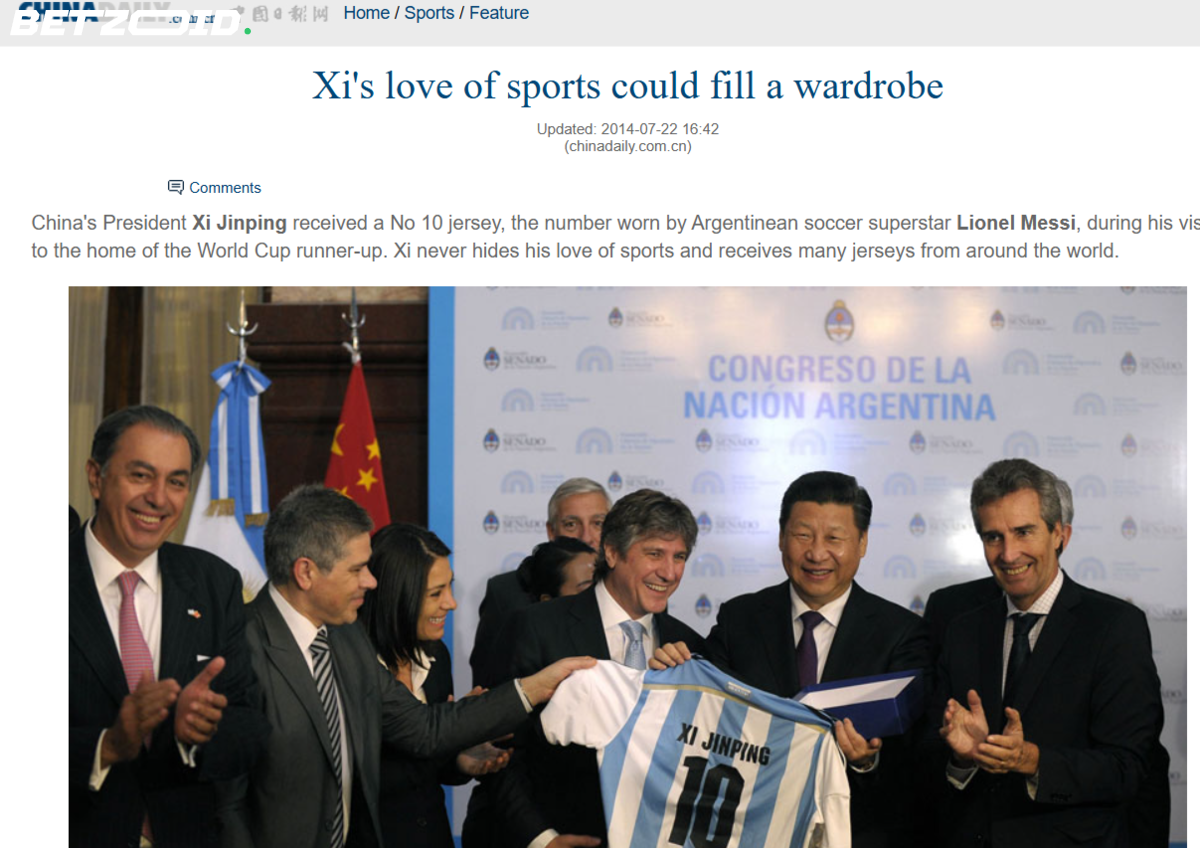
During a 2014 trip to Argentina, Xi was presented with an Argentina national squad jersey featuring Lionel Messi's legendary number 10 alongside Xi's own name. The timing was significant, coming shortly after Argentina's runner-up finish at the World Cup.
Xi's aspirations for Chinese football development run deep. He's publicly committed to building a competitive Chinese football system and seeing the national squad reach the World Cup finals. When China struggled during their 2022 Qatar World Cup qualifying campaign, it triggered a sweeping anti-corruption crackdown throughout Chinese football administration. Chen Xuyuan, former president of the Chinese Football Association, received a life sentence in 2024 after corruption convictions involving bribes valued at approximately 15 billion won.
Recent results from China's youth teams suggest potential progress. At the U-23 Asian Cup, despite a 0-4 defeat to Japan in the championship match, China's silver medal represented their strongest-ever performance at a continental tournament. For those monitoring Asian football growth and youth development, this achievement could indicate rising Chinese competitiveness in upcoming international competitions.