
Officiating Double Standard: Calvert-Lewin Hair Pull Goes Unpunished While Martínez Red Card Stands
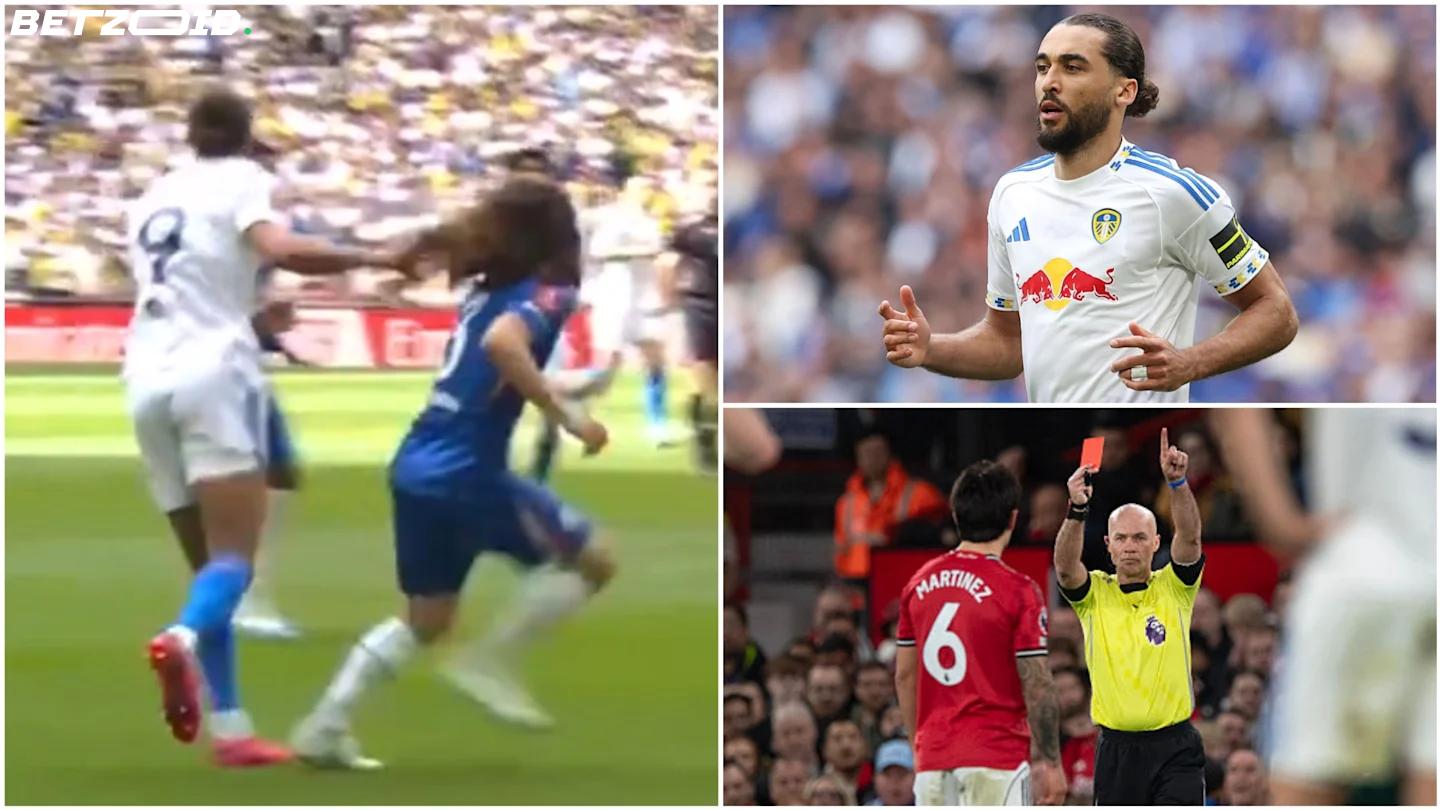
English football's credibility took another hit this weekend as the Football Association's inconsistent enforcement of hair-pulling incidents sparked outrage among fans and pundits alike. The controversy centres on two remarkably similar incidents with wildly different outcomes.
On Friday, the FA's regulatory commission released its written decision upholding Lisandro Martínez's red card appeal rejection. The Manchester United defender was dismissed during a Premier League match against Leeds United at Old Trafford after what initially appeared to be minimal contact with Dominic Calvert-Lewin's hair. Video Assistant Referee intervention led to a straight red card, resulting in a three-match suspension for the Argentine centre-back.
United challenged the decision, claiming wrongful dismissal and excessive punishment, but the FA panel stood firm. Their reasoning? They couldn't determine "with any confidence" that the force applied was "negligible." Crucially, the panel cited Calvert-Lewin's immediate reaction as proof that meaningful contact had occurred.
Role reversal exposes glaring inconsistency
Just 48 hours later, the football world witnessed a near-carbon-copy incident with a completely different result. During Sunday's FA Cup semifinal at Wembley, Calvert-Lewin—now playing as Leeds' striker rather than the aggrieved party—appeared to make downward contact with Chelsea's Marc Cucurella's hair in the first half.
Video footage shows Cucurella's distinctive curls flicking upward as Calvert-Lewin's hand moved away. The Spanish defender immediately clutched the back of his head in discomfort—a reaction virtually identical to Calvert-Lewin's own response in the Martínez incident. Yet referee Jarred Gillett issued no card, and VAR cleared the Leeds forward.
According to TNT Sports commentator Darren Fletcher, who had access to live VAR communications, officials determined the contact came from "the flat of the hand" rather than a grabbing motion, making it insufficient for punishment.
The FA's own words come back to haunt them
The irony isn't lost on anyone who read the FA's written reasons for upholding Martínez's ban. The panel explicitly stated: "In the wider interests of football, hair pulling ought not to be tolerated and should be discouraged through consistent punishment."
That word—consistent—now rings hollow. This marks at least the third instance where hair-pulling has received inconsistent treatment. In February, Fulham's Kenny Tete pulled Bournemouth's Antoine Semenyo's hair during a Premier League fixture without facing any consequences whatsoever.
The Martínez red card was positioned as the standard being established for such incidents. Instead, it increasingly looks like an isolated case rather than precedent-setting enforcement.
Real consequences for clubs and bettors
Manchester United supporters have legitimate grievances. Interim manager Michael Carrick, who was in charge at the time, described the Martínez decision as "one of the worst" calls he'd witnessed in his career. The club invested resources in appealing the decision, only to have it rejected based on Calvert-Lewin's visible reaction proving force was applied.
That same player then appeared to commit an identical offence, the victim reacted in virtually the same manner, and yet the ruling went the opposite direction.
For those following the Premier League title race or wagering on cup competitions, these officiating inconsistencies carry tangible weight. Manchester United served a three-match ban based on a standard that evidently hasn't been applied uniformly since. This isn't merely poor optics—it represents a concrete sporting disadvantage that cannot be reversed.
The FA declared that hair pulling "ought not to be tolerated." Yet it was tolerated at Wembley on Sunday. The governing body's credibility now hangs by a thread—or perhaps by a hair.