
World Cup 2026: One Month Out – Canadian Hopes, Concerns & Tournament Predictions
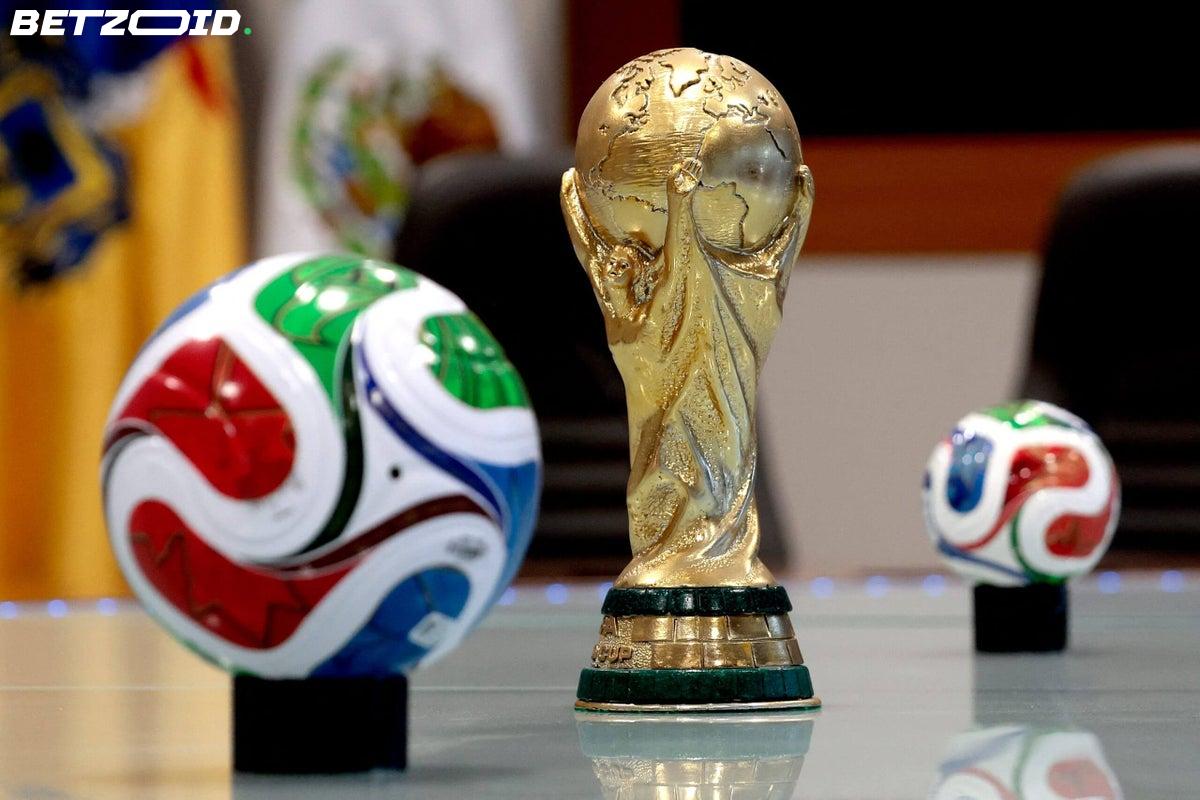
The world's biggest sporting spectacle arrives on North American soil in just thirty days, yet if you strolled through New York City's Manhattan today, you'd struggle to find any indication that history is about to unfold. No banners, no national colours draped from buildings, no palpable buzz in the air. Just a solitary countdown clock tucked inside a shopping centre near Columbus Circle.
This disconnect — between the magnitude of what's coming and the muted anticipation on the ground — captures the peculiar energy surrounding the 2026 World Cup. The football itself is guaranteed to deliver. Whether the electric atmosphere that defines this tournament will materialize remains an open question.
Ticket prices threatening the tournament's soul
The passionate supporters who give the World Cup its heartbeat — those who cross oceans, wear face paint like war medals, and belt out anthems in train stations well past midnight — are being systematically priced out of attendance. Between match tickets, accommodation, and transportation costs, this tournament increasingly feels tailored for executive suites rather than genuine football fanatics. This isn't a trivial concern. These supporters ARE the tournament's lifeblood. Without their presence, we risk seeing partially filled venues and a sanitized spectacle that even the slickest television production can't salvage.
Additional worries are mounting. Political uncertainties surrounding how international visitors will be received in the United States. Infrastructure challenges — Toronto's public transit network is already under anxious scrutiny. The real possibility of weather-related disruptions, as we witnessed during the Club World Cup. This edition carries more unpredictable elements than most tournaments in recent memory.
Breaking down the favourites
France top most expert prediction lists — with solid justification. They dispatched Brazil 2-1 and demolished Colombia 3-1 in March friendlies, the latter victory achieved with what was essentially a backup lineup. Their squad depth presents a nightmare scenario for opponents: their substitutes would start for most competing nations. Their attacking arsenal is formidable, their midfield options extensive, and Kylian Mbappé only needs to show up for the elimination rounds to swing matches single-handedly.
Spain present the strongest counterargument. As reigning European champions, they're bringing a squad that combines veteran savvy with electrifying young talent. Lamine Yamal enters this tournament as one of football's most captivating prospects. If Spain maintain the collective confidence they displayed throughout their Euro 2024 triumph, they're the last opponent anyone wants to encounter in the July 19 final at MetLife Stadium.
Germany are quietly assembling their own compelling case — seven consecutive victories, Jamal Musiala performing at an elite level, and a generation of emerging players unburdened by memories of major tournament failures. That inexperience could prove either liberating or costly.
- Group H appears most straightforward: Spain and Uruguay should advance ahead of Saudi Arabia and Cape Verde.
- Group D is the tournament's powder keg — featuring the United States, Turkey, Australia, and Paraguay, with every match a potential upset.
- Group A carries intrigue: Mexico's preparation has been derailed by a player availability dispute with Liga MX clubs, injecting genuine doubt into the co-hosts' prospects.
- Group B is beautifully unpredictable: host nation Canada, Bosnia and Herzegovina, Qatar, and Switzerland — a quartet where every result feels genuinely uncertain.
Teams demanding your attention
The United States Men's National Team occupies centre stage. They demolished Uruguay 5-1 last November. They also surrendered leads against Belgium and Portugal in March, paying the price both times. This squad possesses legitimate attacking weapons but has demonstrated an inability to close out matches when opponents make tactical adjustments. Playing on home soil before partisan crowds could tip the balance — though the host nation pressure has crushed teams before.
Canada have improved markedly under Jesse Marsch's guidance, with defensive solidity their calling card — just three goals conceded across their last eight matches. The concern? Fitness. Both Alphonso Davies and Moise Bombito have dealt with injury issues, while Jonathan David's maiden Juventus campaign has disappointed. Canada's internal benchmark is simple: win a World Cup match for the first time in the nation's history. Anything short will sting.
England arrive with Thomas Tuchel at the helm, Harry Kane in scintillating form, and a flawless qualifying campaign — eight victories, zero goals conceded. They also carry attacking players who largely endured subpar club seasons and a defensive unit that appears more vulnerable than under Gareth Southgate's tenure. Tuchel's teams historically progress deep into tournaments. Whether this squad has enough when Kane gets neutralized remains unanswered.
One player to monitor outside the established powers: Arda Güler. The 21-year-old Turkish playmaker possesses the rare ability to decelerate play before exploding it forward with a single touch — the type of talent capable of deciding knockout matches from nothing. Turkey's emotional volatility makes them difficult to predict, which only intensifies Group D's combustible nature.
The tournament kicks off June 11. The football, at minimum, should justify the admission cost — whatever that figure ultimately becomes.