
VAR Drama Highlights Premier League's Ongoing Struggle with Set-Piece Fouls
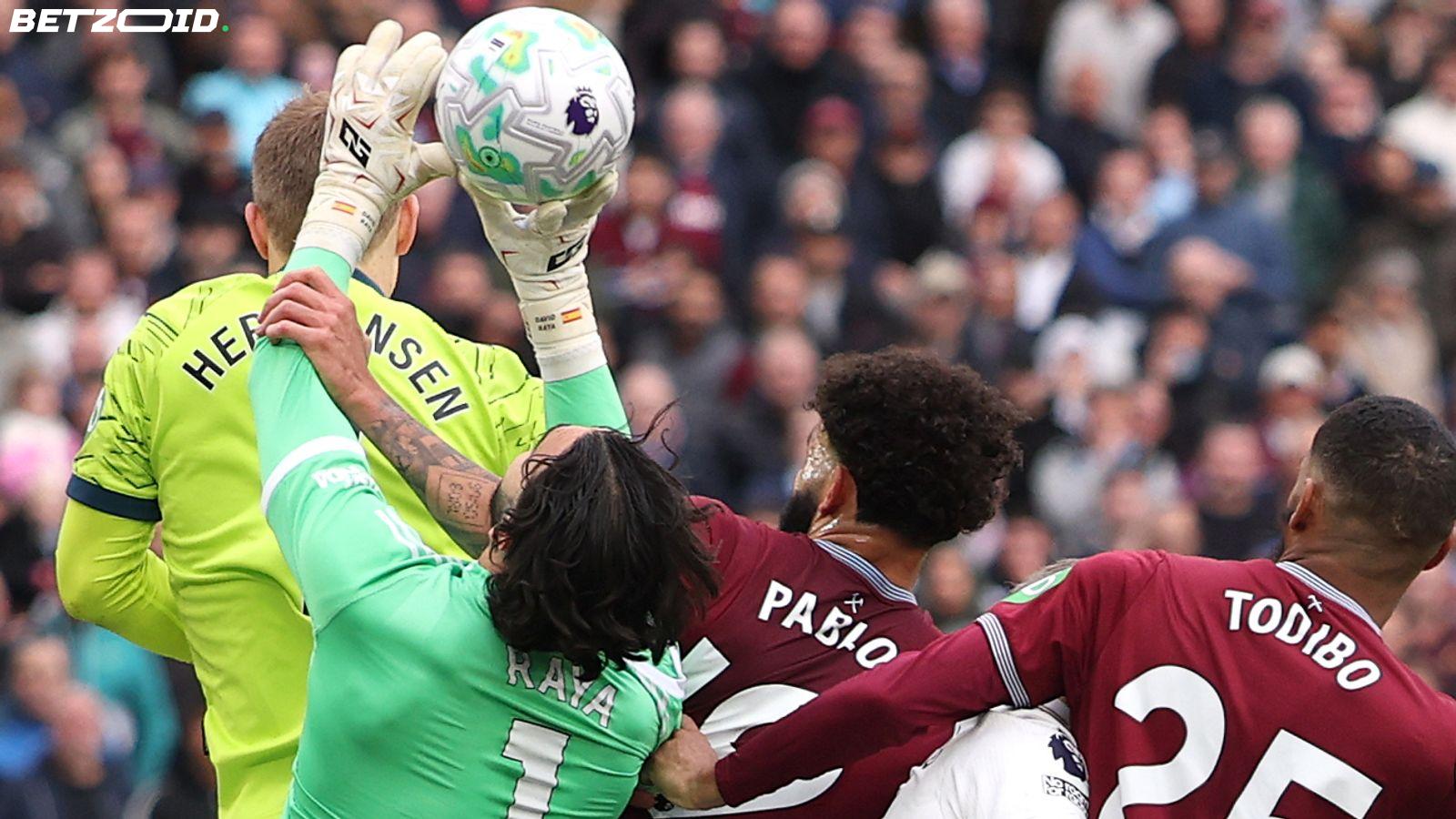
Roy Keane's blunt assessment captured the absurdity perfectly: "Don't make it such an obvious foul." The painful irony? It evidently wasn't clear enough for match officials to spot it live — and that single fact encapsulates the Premier League's current VAR dilemma.
On Sunday, West Ham saw a potential 95th-minute equalizer against Arsenal wiped off the board after VAR official Darren England directed referee Chris Kavanagh to review a foul by Pablo on goalkeeper Aaron Raya. The entire review consumed four minutes and 17 seconds, with Kavanagh examining 17 separate replays before making his final call. Meanwhile, pundit Gary Neville reached an identical conclusion from the broadcast booth using just two replays in under 60 seconds.
Correct Call, Flawed Process
Let's establish the facts: the decision was accurate. Pablo had fully extended his arm across Raya's body, preventing the goalkeeper from challenging for the ball. Simultaneously, Jean-Clair Todibo was tugging on Raya's jersey. Former referee Dermot Gallagher properly broke down the sequence on Ref Watch — the foul on Raya occurred before Declan Rice's challenge on Konstantinos Mavropanos, meaning officials must adjudicate based on chronological order. West Ham's request to PGMOL (Professional Game Match Officials Limited) for additional clarification likely won't yield much success.
However, West Ham have valid concerns about an entirely different aspect. Their contention — that this wasn't genuinely "clear and obvious" given the extended deliberation time — highlights a real inconsistency in how this standard gets interpreted. When a decision demands 17 replays and more than four minutes of analysis, the "clear and obvious" benchmark begins to appear rather flexible.
Former top-flight referee Mike Dean didn't hold back his criticism: "I'm just frustrated that the officials aren't making decisions. They're simply not making on-field calls." His assessment hits the mark. The on-field crew should have whistled this foul during live play. That they failed to do so — requiring VAR intervention to correct the mistake — represents the more fundamental problem.
Systematic Wrestling Tactics in the Penalty Area
Sunday's incident truly revealed that penalty-box wrestling has evolved into a systematic approach throughout the Premier League. This isn't accidental contact — clubs are specifically coaching players to obstruct and hold during set pieces because the likelihood of getting punished remains minimal.
PGMOL head Howard Webb announced a "measured crackdown" on holding violations back in August. The threshold guidelines specify that a penalty should only be awarded when the foul is "clear, impactful and sustained" — meaning if even one of these three criteria is absent, no penalty gets called. Through last month, merely seven penalties had been given all season for holding or grappling infractions. Just seven.
The Premier League's internal survey results explain why Webb hasn't implemented stricter enforcement. Clubs and key stakeholders have consistently emphasized:
- A high bar for handball violations
- Limited VAR involvement
- Acceptance of physical play
The physical nature of English football genuinely represents a marketable feature. However, there's a meaningful distinction between a physical competition and one where jersey-pulling at corner kicks goes unpunished by deliberate policy. The existing guidelines essentially enable this tactic.
For betting markets, this matters significantly. Corners and set-piece scenarios represent major factors in odds calculations — when foul enforcement in these situations proves this inconsistent, outcomes become substantially harder to predict accurately. West Ham find themselves battling relegation where a single dropped point could determine their season's fate. Arsenal might end up in a title race where this disallowed equalizer could have dramatically altered the final standings. Sunday's stakes couldn't have been higher.
Gallagher described it as "probably the most impactful decision VAR has rendered in the seven years since its introduction." He may well be correct. Yet the league still lacks a coherent solution to prevent similar controversies moving forward.