
Stuart Attwell Quietly Sidelined From Nottingham Forest Matches as PGMOL Policy Raises Questions
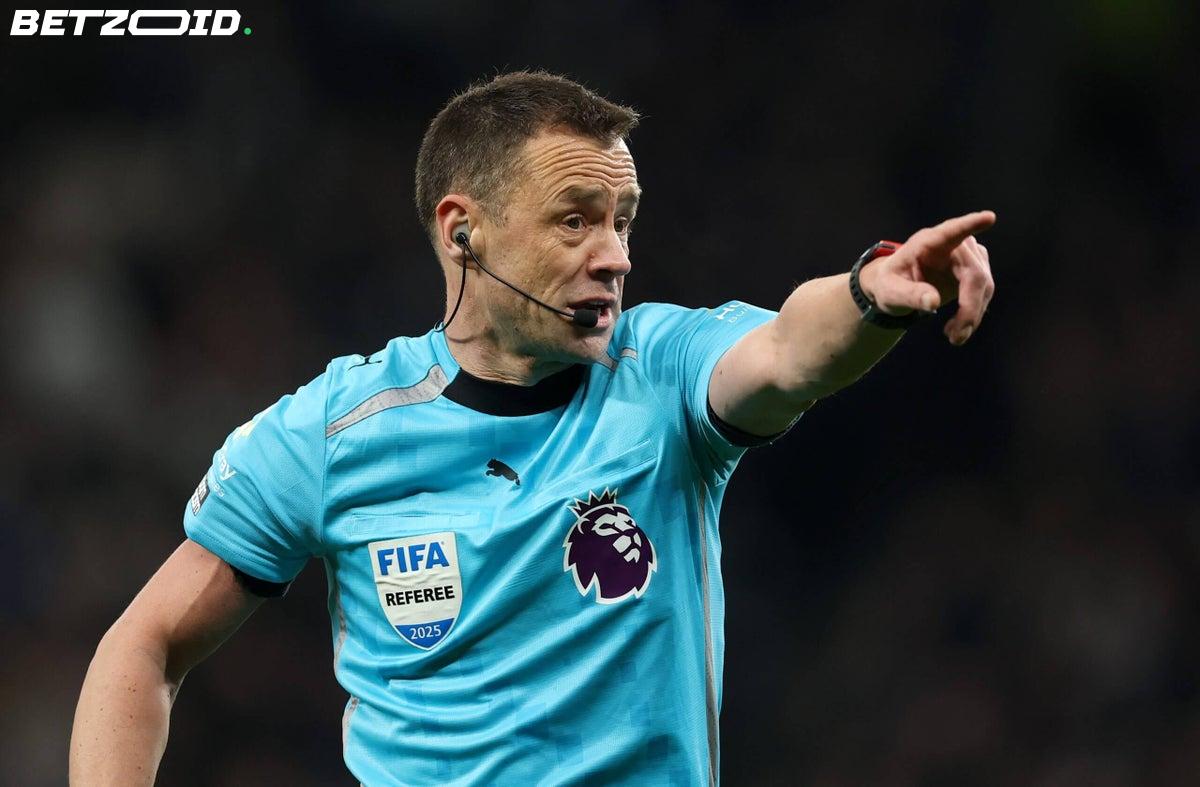
Stuart Attwell hasn't been assigned to a single Nottingham Forest fixture — whether as centre referee, fourth official, or video assistant referee — since April 2024. This isn't a matter of random scheduling. It's a calculated decision by the Professional Game Match Officials Limited (PGMOL), and it prompts serious questions about transparency in Premier League referee assignments.
The context: Attwell served as VAR during Forest's loss to Everton at Goodison Park, a contest that saw three penalty kicks awarded to the hosts amid a fierce relegation scrap. Forest's social media team responded by publicly identifying Attwell as a Luton Town supporter — another club fighting for Premier League survival. The Football Association handed down severe punishment: a £750,000 fine, the largest ever for a social media violation, alongside a public statement condemning what they called an unprecedented assault on officiating integrity.
The FA and PGMOL publicly defended Attwell's professionalism. Then they quietly ensured he wouldn't work another Forest match.
So who really came out on top?
There's a genuine contradiction at play. The PGMOL has history with keeping match officials away from certain clubs — Kevin Friend never refereed Bristol City matches due to his allegiance to the club, and Mark Clattenburg was kept away from Goodison Park for years following a controversial 2007 Merseyside derby. Those decisions had clear logic. This situation is markedly different.
Nottingham Forest were the offending party. They paid a record fine. Yet Attwell — a FIFA-listed official who became the Premier League's youngest referee at age 25 — is the one facing assignment restrictions. Just three months ago, he was quietly removed from Forest's FA Cup match at Wrexham and replaced by Darren England. The PGMOL has offered no public explanation.
The implication that Attwell cannot impartially officiate Forest fixtures is hard to justify. What this resembles more closely is an organization prioritizing public perception over consistent principles — exactly the approach that gradually undermines confidence in officiating. From a statistical standpoint, nothing in Attwell's decision-making patterns changed following that social media post. His competence remained constant.
Liverpool's emerging talent faces lengthy recovery ahead
In other news, Hugo Ekitike's ruptured Achilles tendon — sustained during Liverpool's Champions League loss to Paris Saint-Germain — represents one of football's most challenging injuries. Approximately 20 per cent of professional footballers who suffer Achilles ruptures never fully regain their pre-injury athletic capabilities. That's one in five players permanently affected. This context is crucial when evaluating Liverpool's expectations for his return.
Ekitike had emerged as one of the genuine bright spots during a challenging Liverpool campaign. He'll miss France's World Cup squad. He'll be sidelined for several months. Even following surgery, the initial rehabilitation phase is so restrictive that normal walking is significantly limited — the complete recovery timeline is extended, unpredictable, and offers no guarantee of returning to previous form.
While ACL injuries typically dominate football's injury discussions, Achilles ruptures carry a different type of concern. ACL recovery is grueling in length; Achilles recovery is grueling in its long-term prognosis. Twenty percent never reaching their former level isn't trivial. For a player of Ekitike's age and potential, that statistic will loom over every rehabilitation milestone until he returns to action.