
FIFA to Debate Ending Russia's Football Suspension at Vancouver Congress
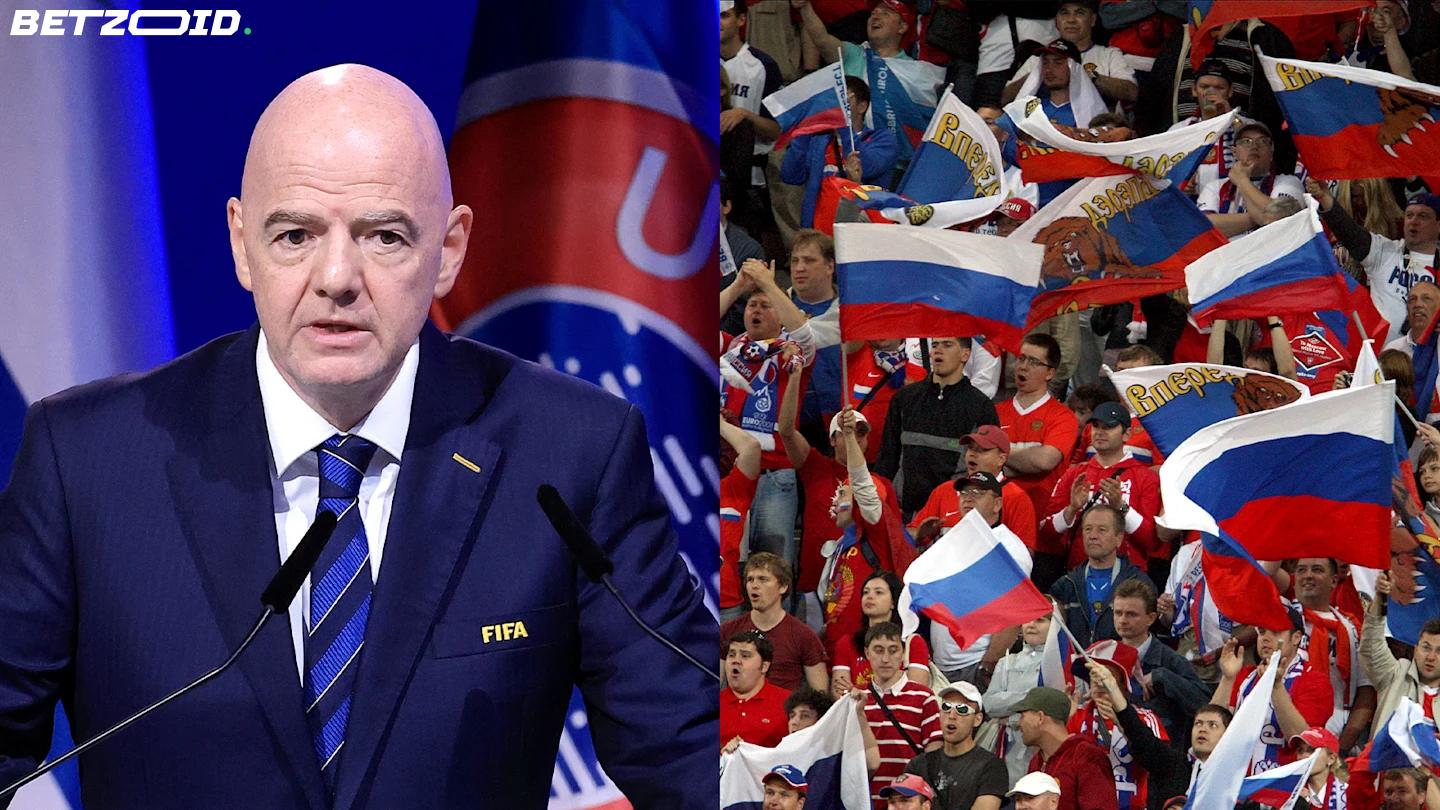
"This ban has not achieved anything. It has just created more frustration and hatred." Those words from FIFA president Gianni Infantino during a February Sky News interview weren't off-the-cuff remarks — they signal a clear direction as FIFA prepares to formally address Russia's suspension at Thursday's Congress in Vancouver.
More than 1,600 delegates will gather in the Canadian city to debate Russia's three-year exclusion from international football for the first time since the ban took effect in February 2022, following Russia's military invasion of Ukraine.
Three Years on the Sidelines
Since FIFA and UEFA imposed the suspension, Russian football teams at every level — senior men's, women's, and all youth categories — have been barred from competitive matches. The senior men's squad hasn't played a competitive fixture since their final 2022 World Cup qualifier nearly five years ago.
Instead, Russia has cobbled together a schedule of unofficial friendlies against Mali, Nicaragua, Peru, Chile, and Iran — nations willing to engage outside the formal FIFA framework. It's a far cry from competing in World Cup qualifiers or European Championships.
What's Actually on the Table in Vancouver
Thursday's Congress isn't expected to deliver immediate reinstatement, but it represents the strongest indication yet that FIFA's leadership is moving toward welcoming Russia back. While suspended cases involving Pakistan and Congo are also scheduled for discussion, neither carries the geopolitical significance of the Russia question.
Infantino has already outlined a potential pathway. FIFA's newly announced global U15 tournament, scheduled for 2027, is advertised as "open to all 211 FIFA member associations" — language that barely masks its implications. Should Russia participate in that youth competition, it would effectively crack open the door for broader participation.
The logical next step would be Russia's return to qualifying for the 2028 UEFA European Championship, which will be hosted across venues in the United Kingdom and Ireland.
UEFA previously considered allowing Russian U17 teams back into competition in 2023, arguing that teenagers shouldn't face consequences for government actions. However, intense pressure from European member nations forced UEFA to abandon that plan. That opposition hasn't diminished.
International Sport's Broader Trend Toward Reinstatement
Football wouldn't be breaking new ground. The International Paralympic Committee has already permitted Russian athletes to compete under their national flag at the Milan Cortina 2026 Paralympics — marking the first such allowance since 2018. World Aquatics has completely lifted its ban on the Russian flag and national anthem.
Both decisions triggered significant controversy. Denmark, Finland, Iceland, Norway, and Sweden have joined boycott initiatives targeting World Aquatics specifically over this policy reversal. The emerging pattern shows international sports organizations gradually moving toward reintegration while the Ukraine conflict continues, even as a bloc of nations — particularly in northern Europe and Eastern Europe — maintains firm opposition.
What Russia's Return Would Mean for European Football
For UEFA tournament planners and betting markets, a reinstated Russia fundamentally alters European qualifying dynamics. Before the suspension, Russia was a mid-tier European side — not strong enough to dominate top-ranked nations, but perfectly capable of taking points from teams ranked below them.
Five years without competitive football creates genuine uncertainty. Forecasting Russia's current strength level is nearly impossible. Any qualifying group that includes Russia in the next cycle becomes difficult to predict with confidence.
Infantino's assertion that the ban "hasn't achieved anything" may be politically motivated, but it contains sporting truth. The Russian Football Union continues to exist, fund its programs, and organize matches. The suspension hasn't dismantled football infrastructure within Russia.
What the ban has accomplished is removing Russia from competitive international football for half a decade — and nobody, including FIFA itself, can accurately predict what Russian football will look like upon return.
"Having girls and boys from Russia being able to play football games in other parts of Europe would help," Infantino stated. Whether that argument prevails in Vancouver — or gets overruled by nations that view sports sanctions as essential diplomatic pressure — will become clear by week's end.