
Mouth-Covering During Disputes Now Draws Automatic Red Card Under New IFAB Rule
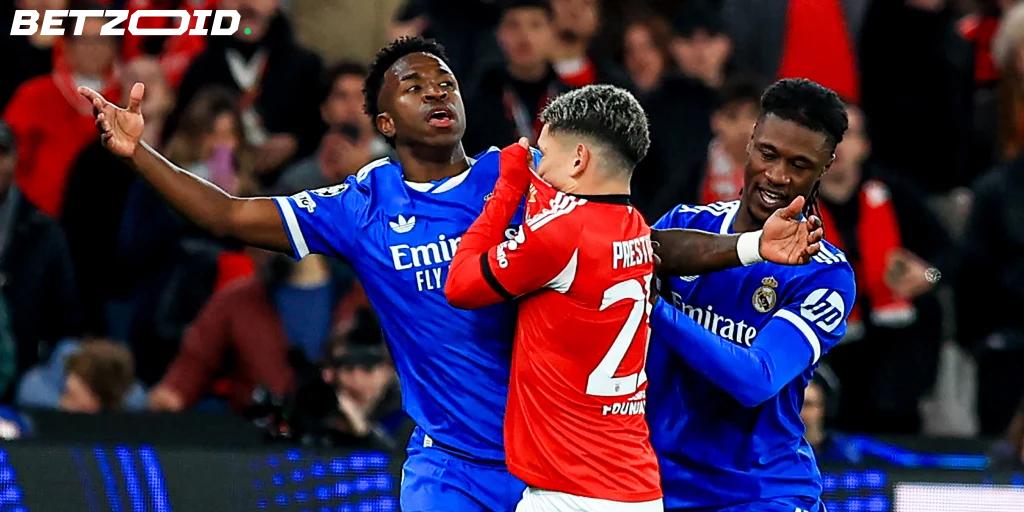
The International Football Association Board has implemented a controversial new regulation that could reshape player conduct on the pitch. Effective immediately, any player who conceals their mouth during an on-field confrontation will receive a straight red card and be sent off.
The unanimous decision came during a special IFAB meeting held in Canada, where football's rule-making body also approved a second significant change: players who walk off the field in protest of a referee's call will face immediate ejection.
The Incident That Changed Everything
The catalyst for this rule change traces back to a February Champions League playoff match between Real Madrid and Benfica. Around the 50-minute mark, Vinícius Júnior found the back of the net and performed his signature celebration dance. What followed sparked international debate about accountability in football.
Benfica's Gianluca Prestianni approached the Brazilian forward with his jersey pulled up to cover his mouth. The two players exchanged words before Vinícius walked away appearing distressed. He immediately sought out the match official and made the crossed-arms gesture — the universal signal indicating alleged racist abuse. Play was halted and an investigation launched.
The match concluded without disciplinary action on the pitch. Post-game, Vinícius publicly stated that Prestianni had directed a racist slur toward him. The Argentine player took to Instagram to deny the accusation, claiming Vinícius had "regrettably misunderstood what he thought he heard."
The controversy intensified when Kylian Mbappé entered the conversation with unambiguous testimony. "He said it five times," the French superstar declared. "I am speaking as clearly as possible. I am telling you what I think and what I heard, and I heard it very well." This wasn't merely character testimony — it was a direct eyewitness statement that elevated the incident's severity.
In his eventual submission to UEFA officials, Prestianni admitted to using a homophobic slur rather than a racist one. UEFA handed down a six-match ban for homophobic discrimination. The distinction proved significant: racist abuse carries a 10-game suspension, making the differentiation important both legally and in terms of public perception.
FIFA's Justification
FIFA President Gianni Infantino offered straightforward reasoning when speaking with Sky News about the new regulation. "There must be a presumption that he has said something he shouldn't have said, otherwise he wouldn't have had to cover his mouth," Infantino explained. The logic is difficult to dispute, though the rule's directness will undoubtedly spark ongoing discussion.
Implementation presents genuine challenges. Match officials already face immense pressure during live play. Determining whether a hand-to-mouth gesture represents deliberate concealment or simply habit will create grey-area decisions. Teams losing players to this rule during crucial knockout matches will certainly voice their concerns.
Nevertheless, football faced an undeniable problem, and this represents a definitive response. The Vinícius-Prestianni situation demonstrated exactly how easily words spoken on the pitch can be denied indefinitely afterward. For betting enthusiasts following World Cup group stage markets, red card odds just became marginally more intriguing.
Prestianni continues serving his six-game UEFA suspension. As for Vinícius, he never received a conclusive answer about what was actually said to him that evening in Lisbon.